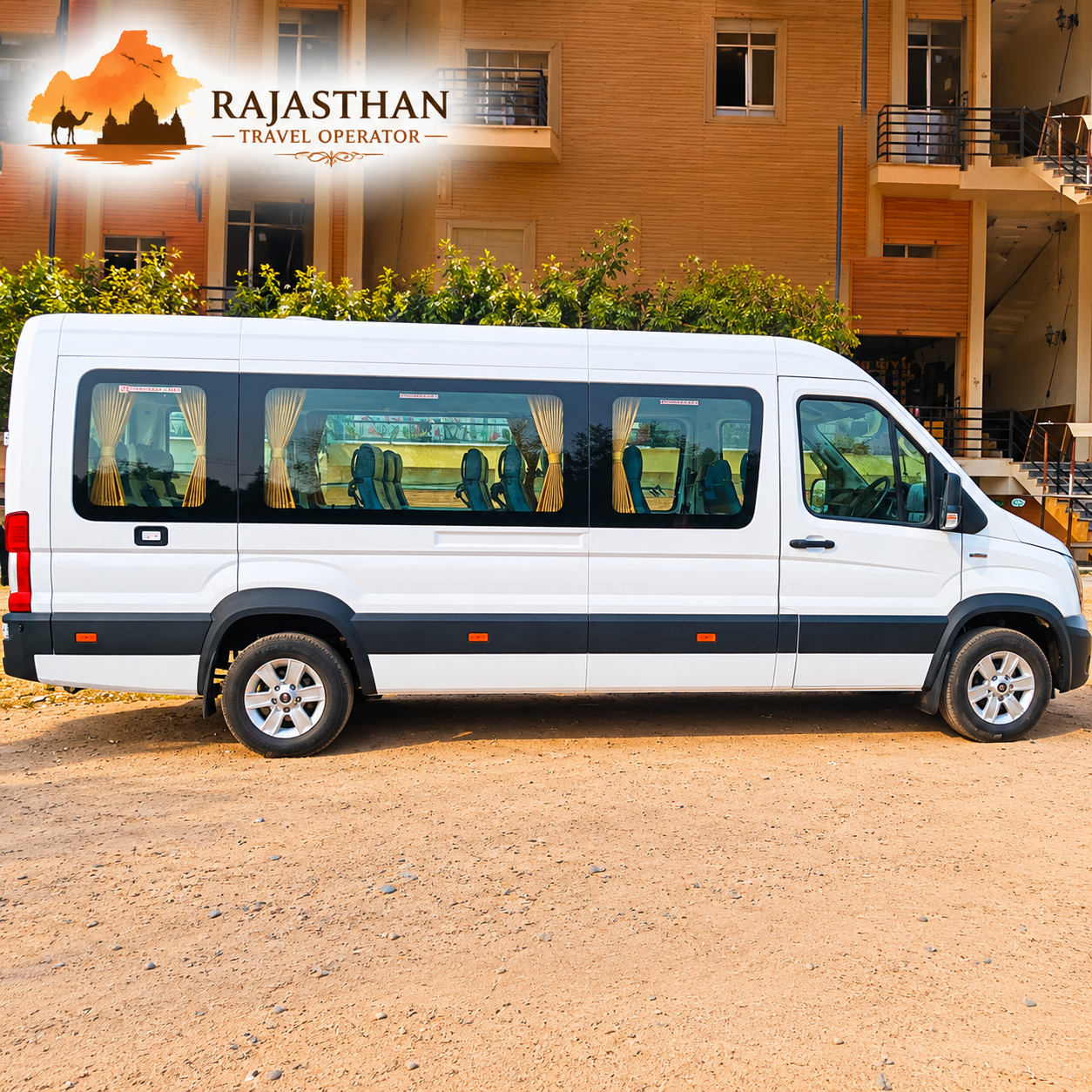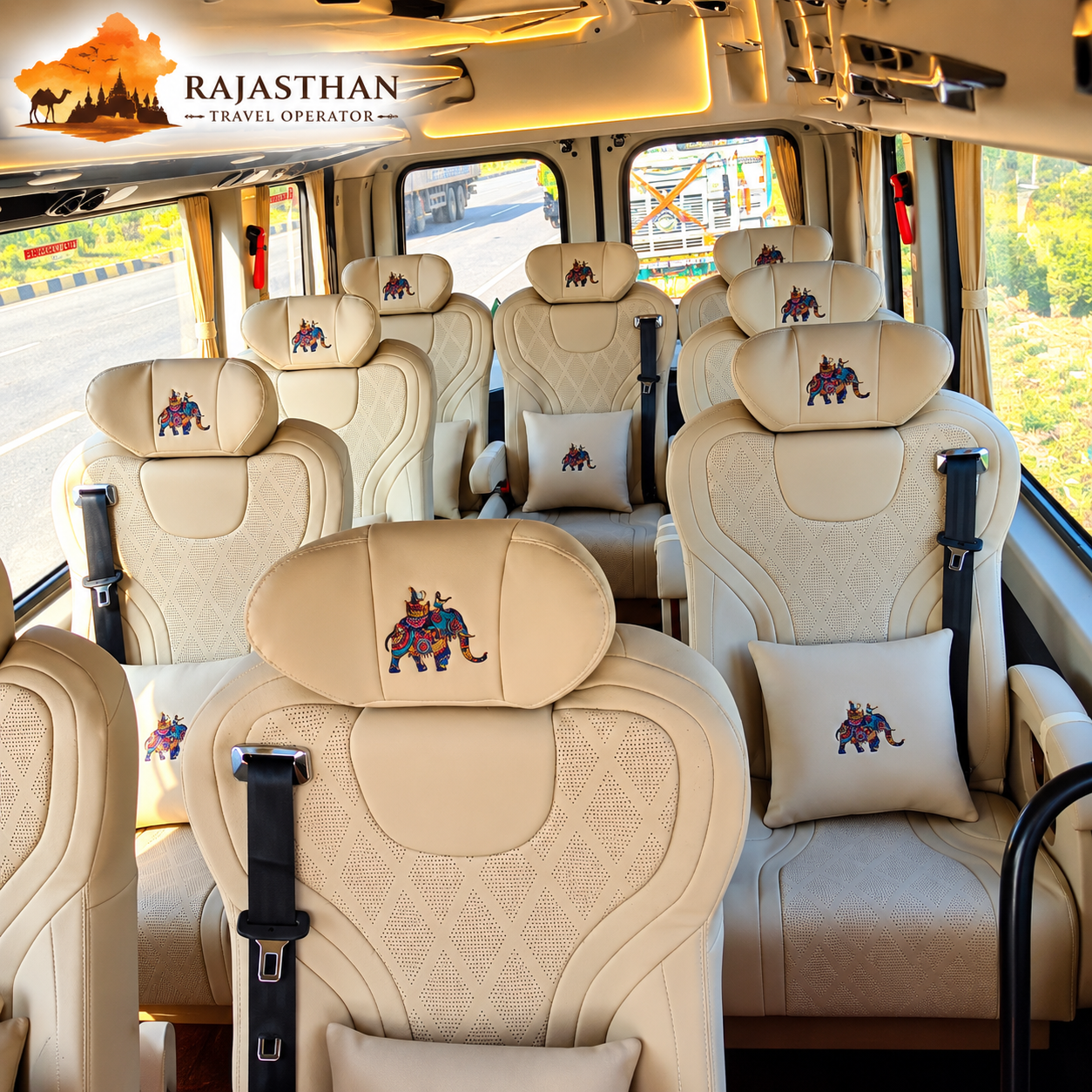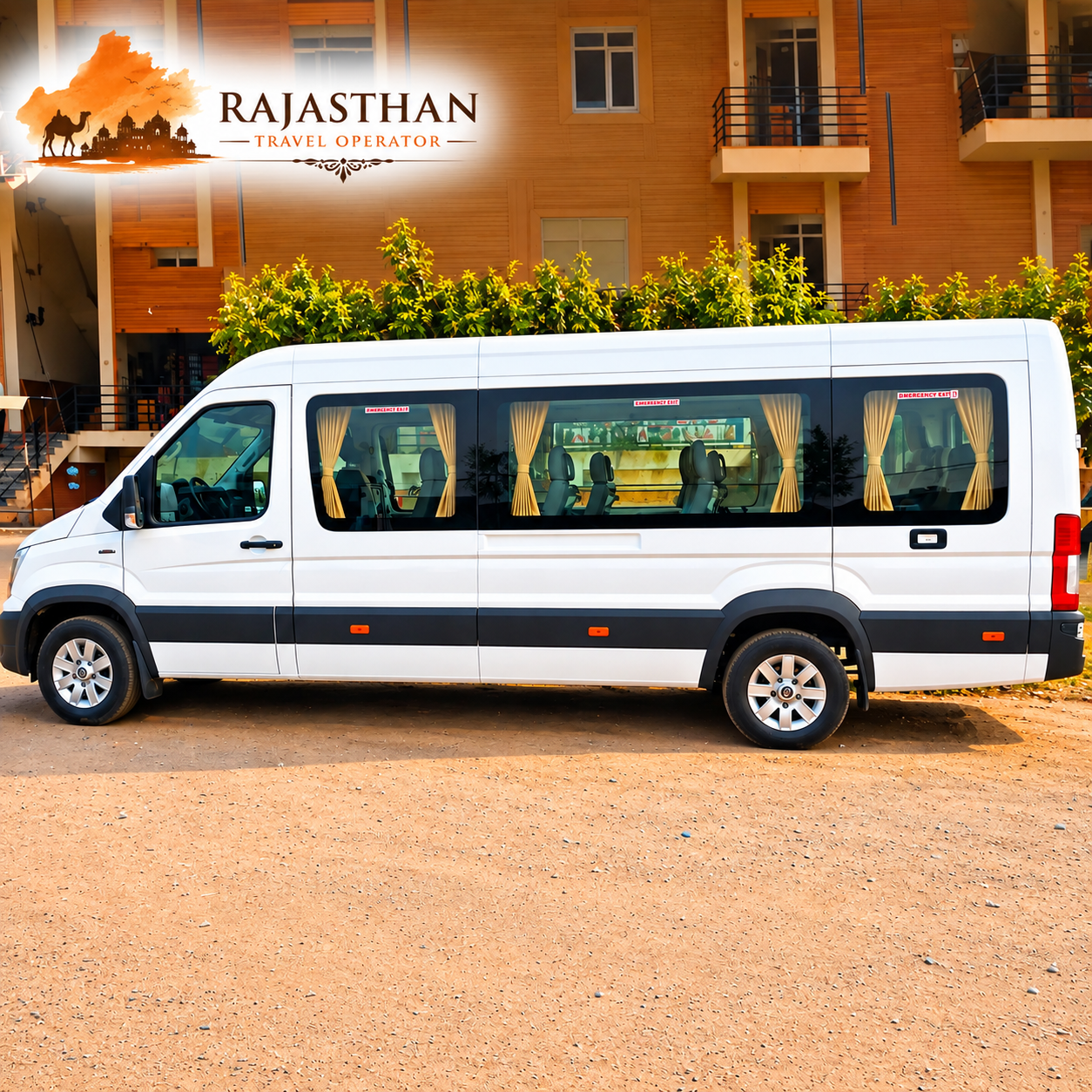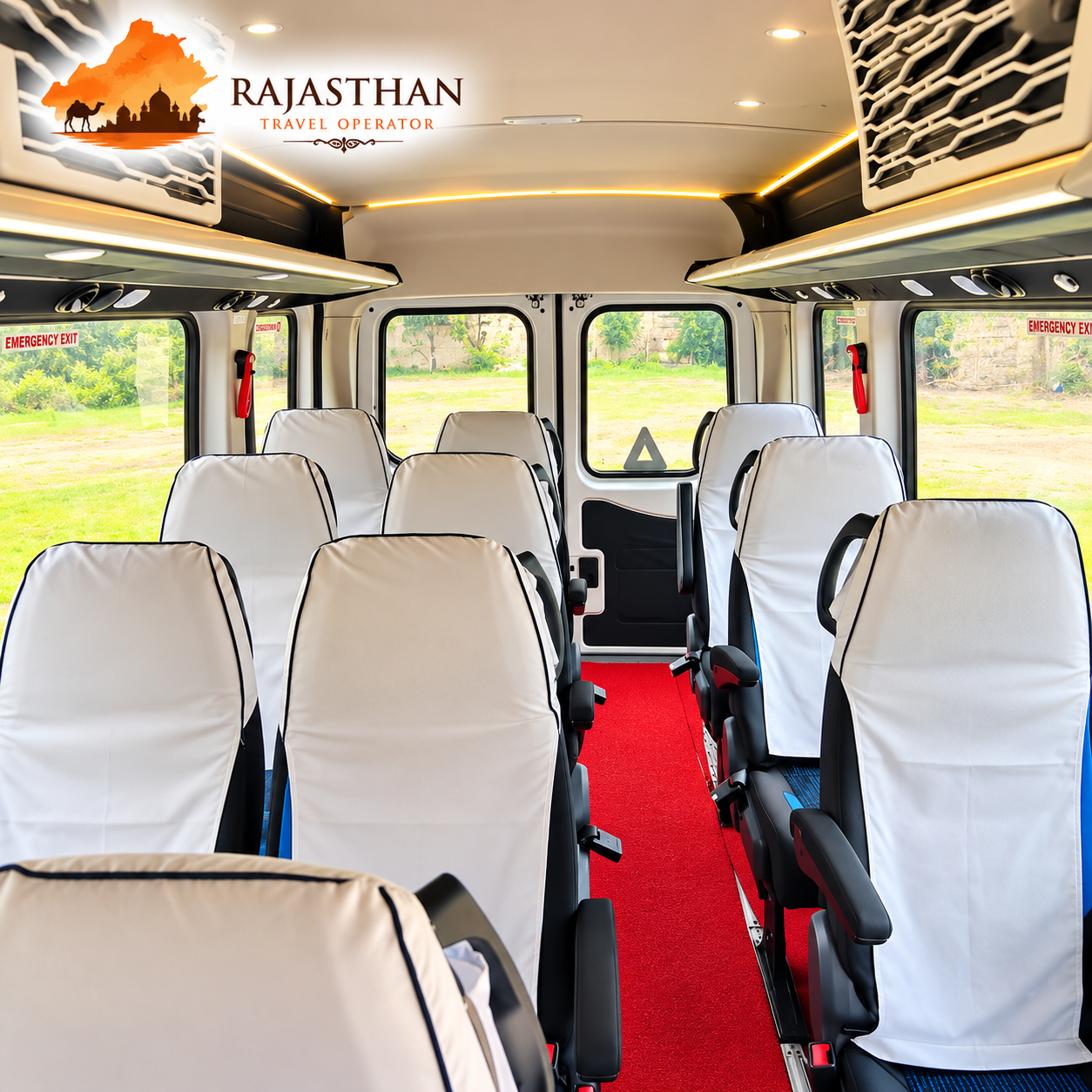
Why This Guide Is About the Process, Not the Fleet
Most guides to renting a tempo traveller in Jaipur focus on the vehicle — seat counts, trims, which size fits your group. All useful, but it skips a real question first-time bookers actually have: what does the process itself look like, from the first message to the driver dropping you home at the end of the trip? This guide walks through that timeline, step by step, so there are no surprises in how the booking actually unfolds.
Step One: Figuring Out What You Actually Need
Before contacting any operator, get two numbers straight — your confirmed headcount and your rough itinerary. Not an estimate of who “might” come, the actual final list, since the difference between “around ten” and a confirmed ten changes which size you should even be asking about. Rough out the days and cities too, even loosely — a Jaipur–Udaipur–Jodhpur circuit is a different booking conversation than a single-day local tour, and knowing this upfront saves several rounds of back-and-forth.
If your headcount is small, the9 seater tempo traveller or 10 seater tempo travellerrange is worth starting with. For a family of ten to twelve, look at the tempo traveller 12 seater or 12 seater hire in Jaipur options. Larger groups should check the 16 seater tempo traveller, tempo traveller 17 seater, or20 seater tempo travellerdepending on exact numbers.
Step Two: Reaching Out and Getting an Initial Quote
Most Jaipur operators respond fastest over WhatsApp rather than a phone call, and it’s worth using that channel deliberately — a written quote is something you can compare later, while a verbal one over a call is easy to misremember or dispute afterward. State your headcount, dates, cities, and roughly how much luggage is coming in the very first message. The more specific your first message, the more accurate the first quote will be, which saves everyone a round of clarifying questions.
Expect a base quote to come back fairly quickly, usually within the same day for a normal-season booking. This first number is rarely the complete picture — treat it as a starting point, not the final figure.
Step Three: Turning a Base Quote Into a Real One
This is the step most first-timers skip, and it’s the one that prevents surprises later. A base quote typically covers the vehicle and driver with a daily kilometre allowance, usually somewhere around 250–300 km. It often doesn’t include driver allowance for food, night halt charges for outstation multi-day trips, tolls, state permits for interstate routes, or the per-km rate for going over the daily cap.
Ask for all of these explicitly, in one message, and ask the operator to combine them into a single all-inclusive total for your specific itinerary. This single step is the difference between comparing two quotes fairly and comparing two incomplete numbers that look different on paper for no real reason.
Step Four: Confirming the Specific Vehicle
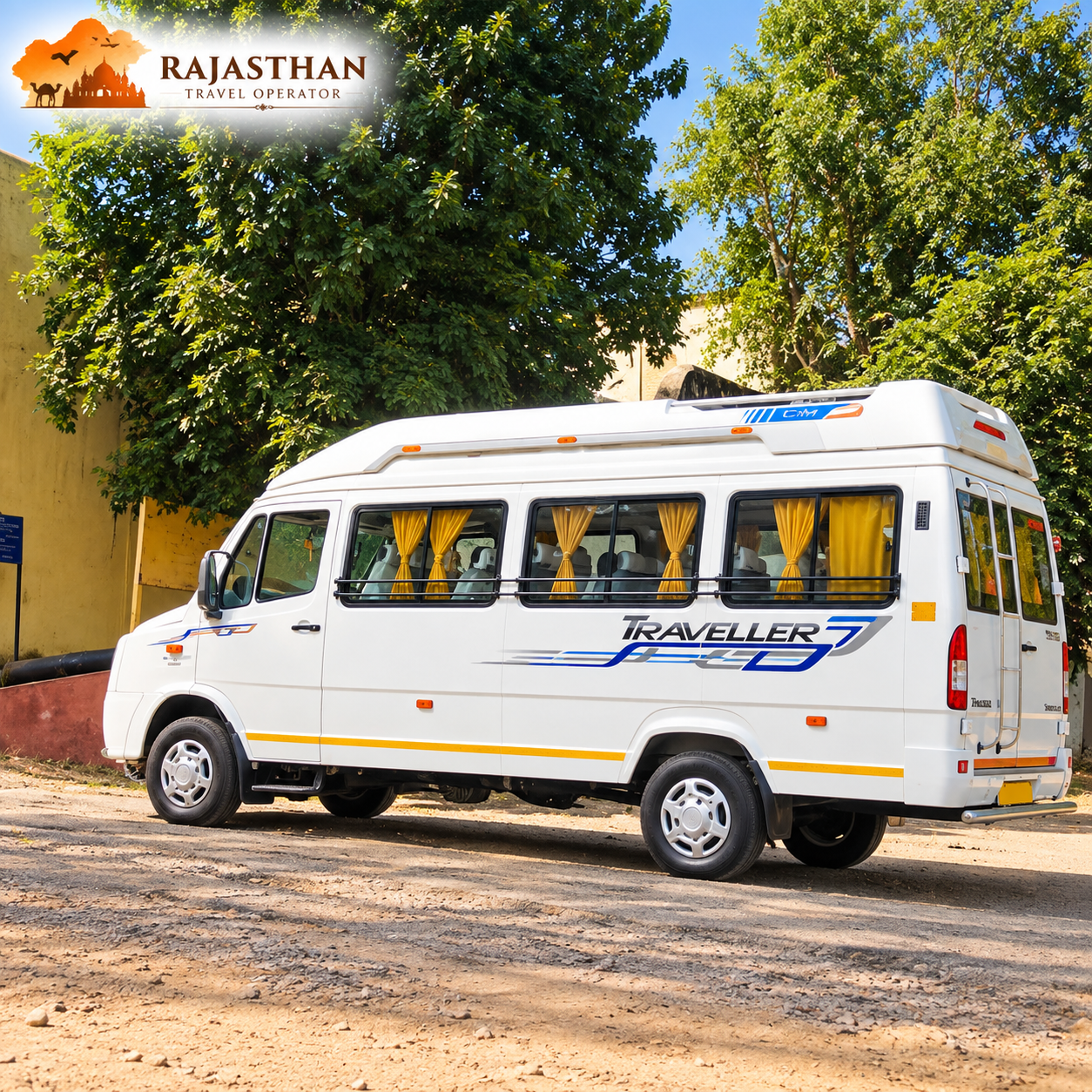
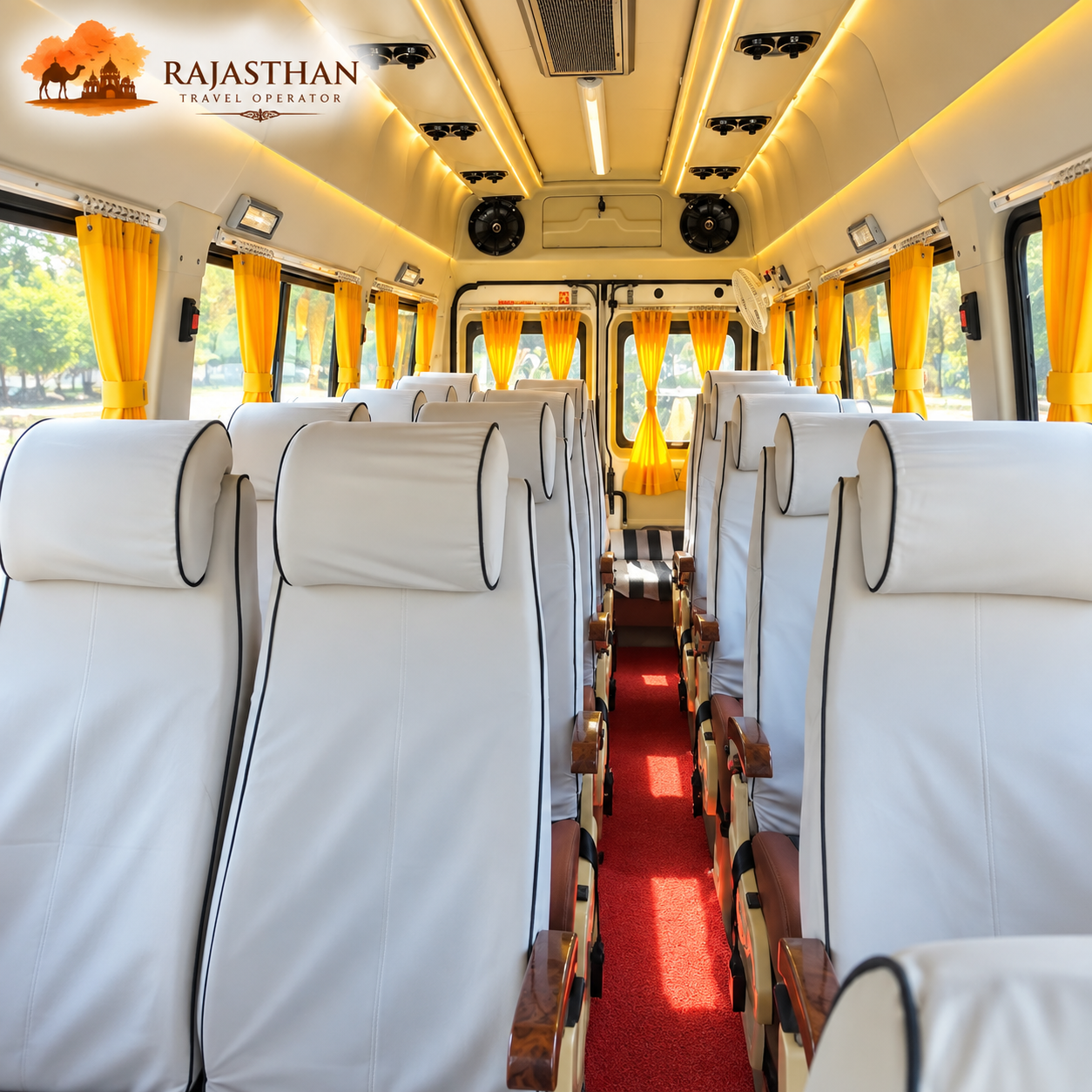
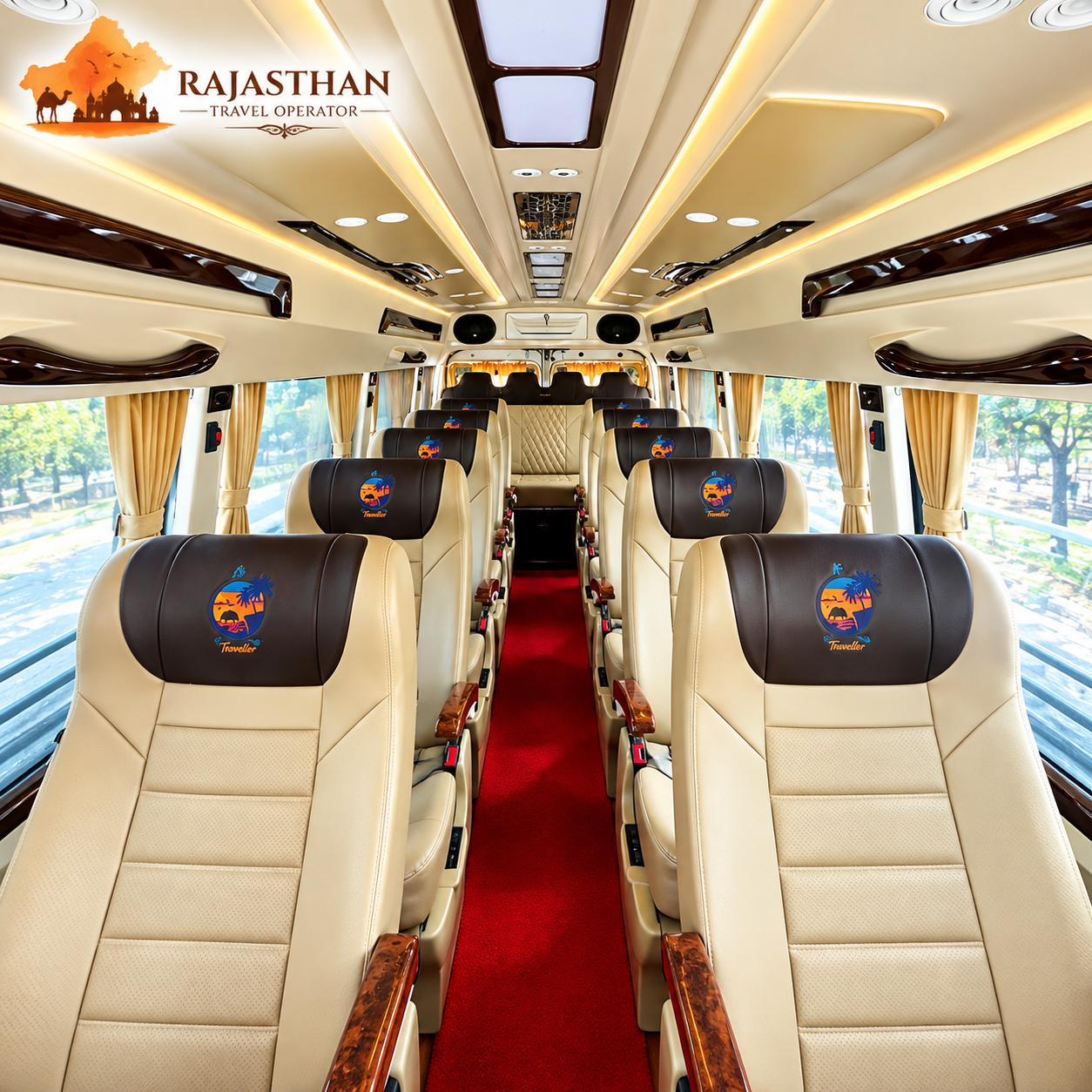
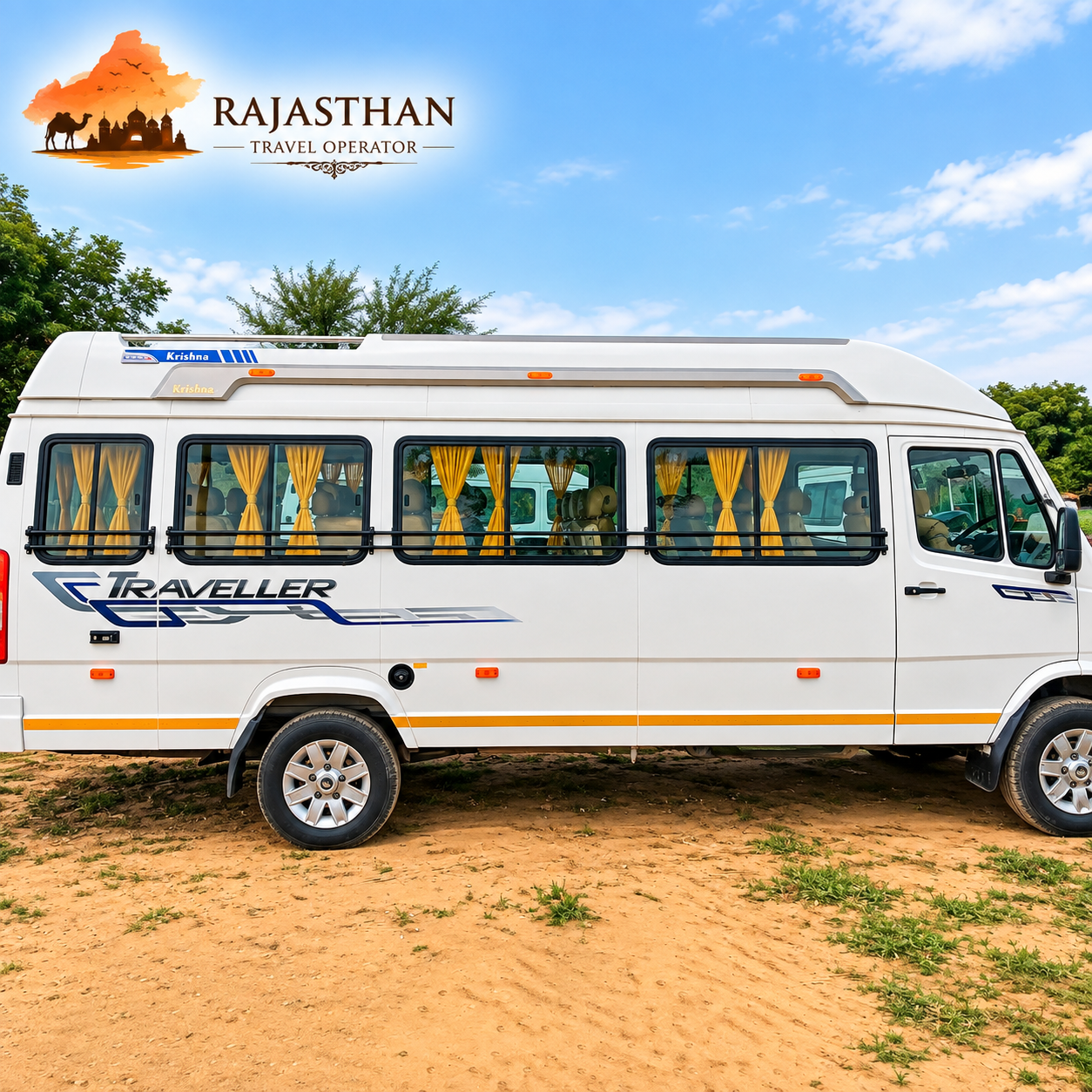
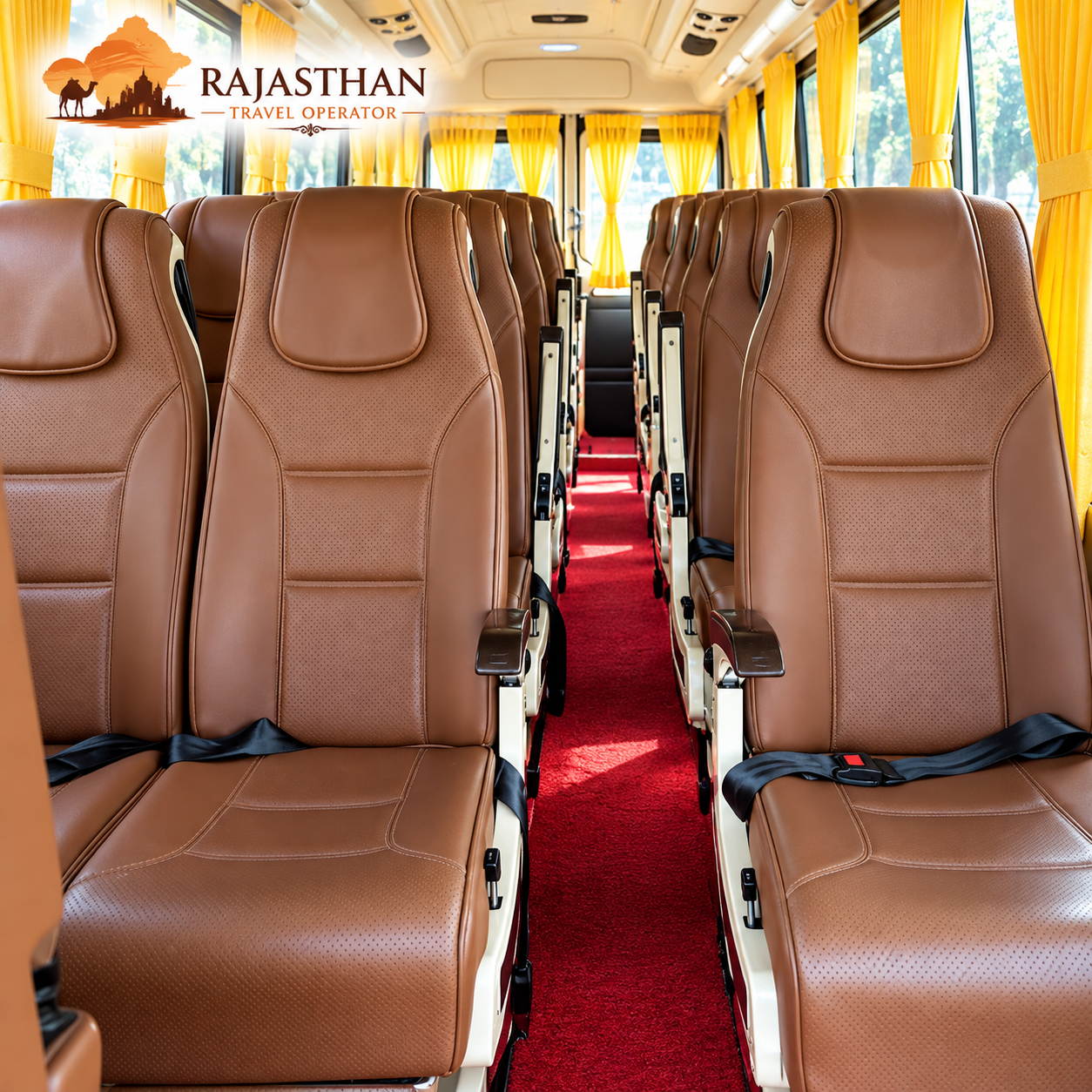
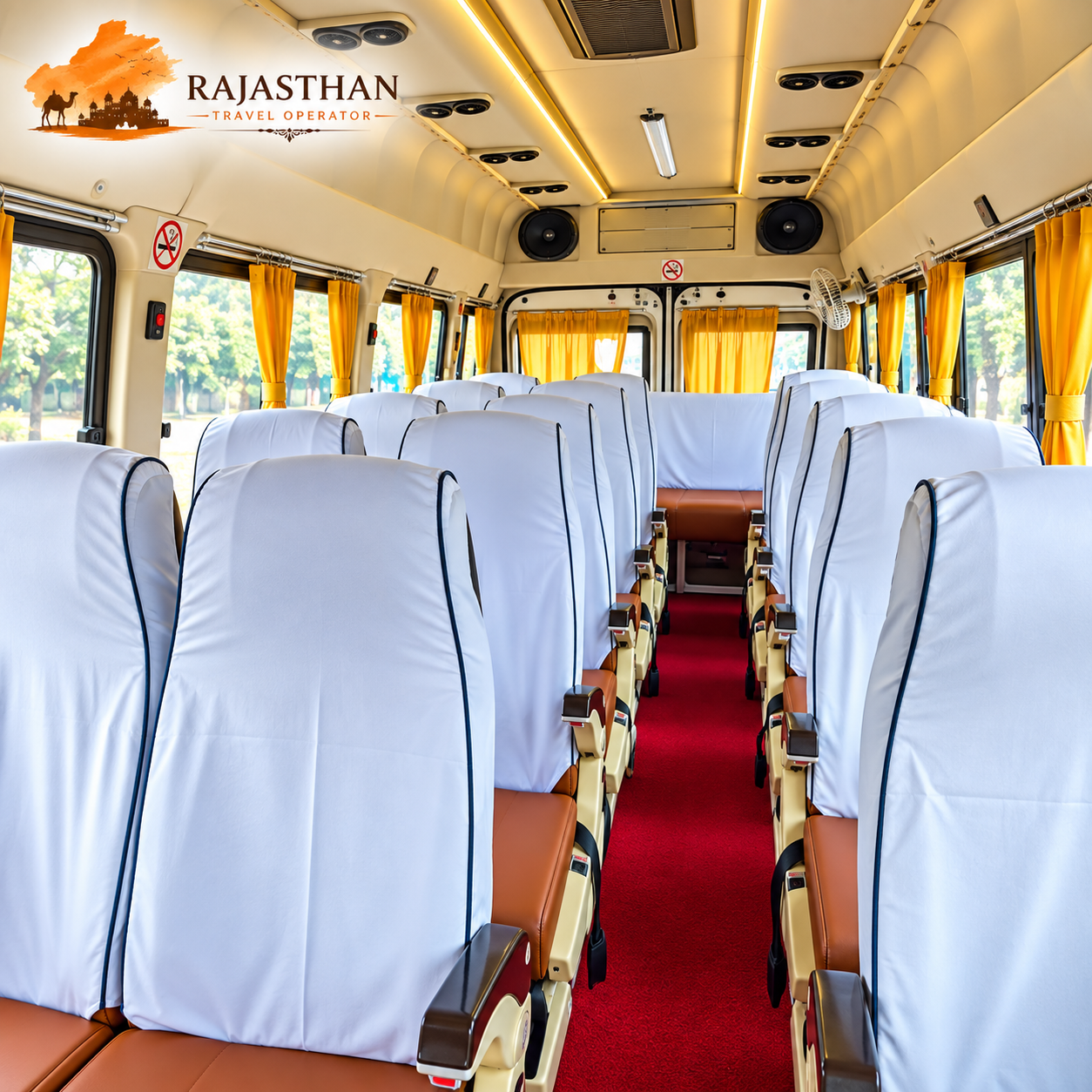
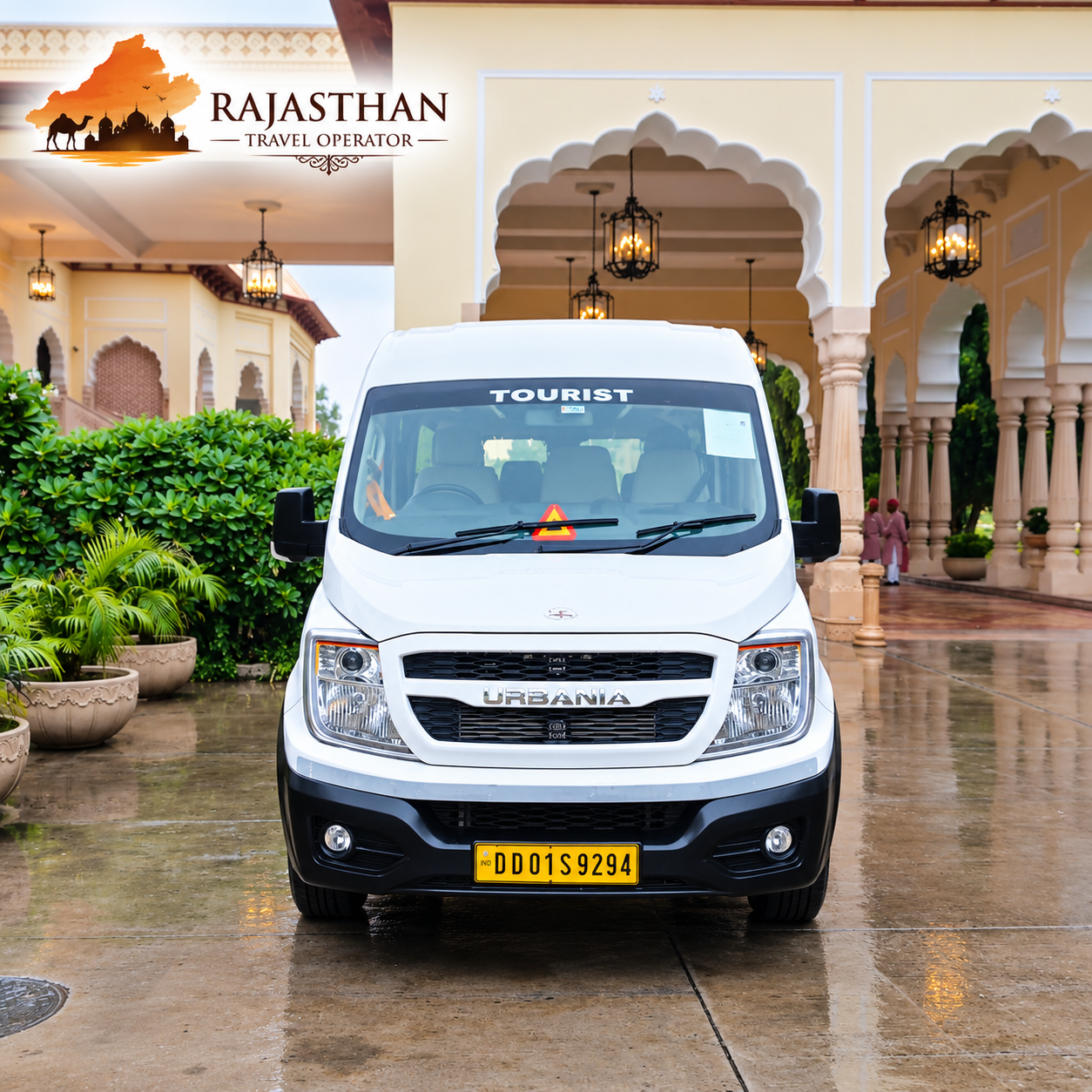
Once you’re happy with the price, the next step is pinning down which actual vehicle you’re getting — not just the seat count, but the model, trim, and condition. Ask directly which chassis and trim is being quoted: standard or luxury tempo traveller, a Maharaja seat configuration if that’s relevant to your group, or the Urbania tempo traveller platform if ride comfort is a priority over roof storage. Ask for the vehicle’s registration year and, ideally, a recent photo of the specific vehicle being assigned — not a generic listing image.
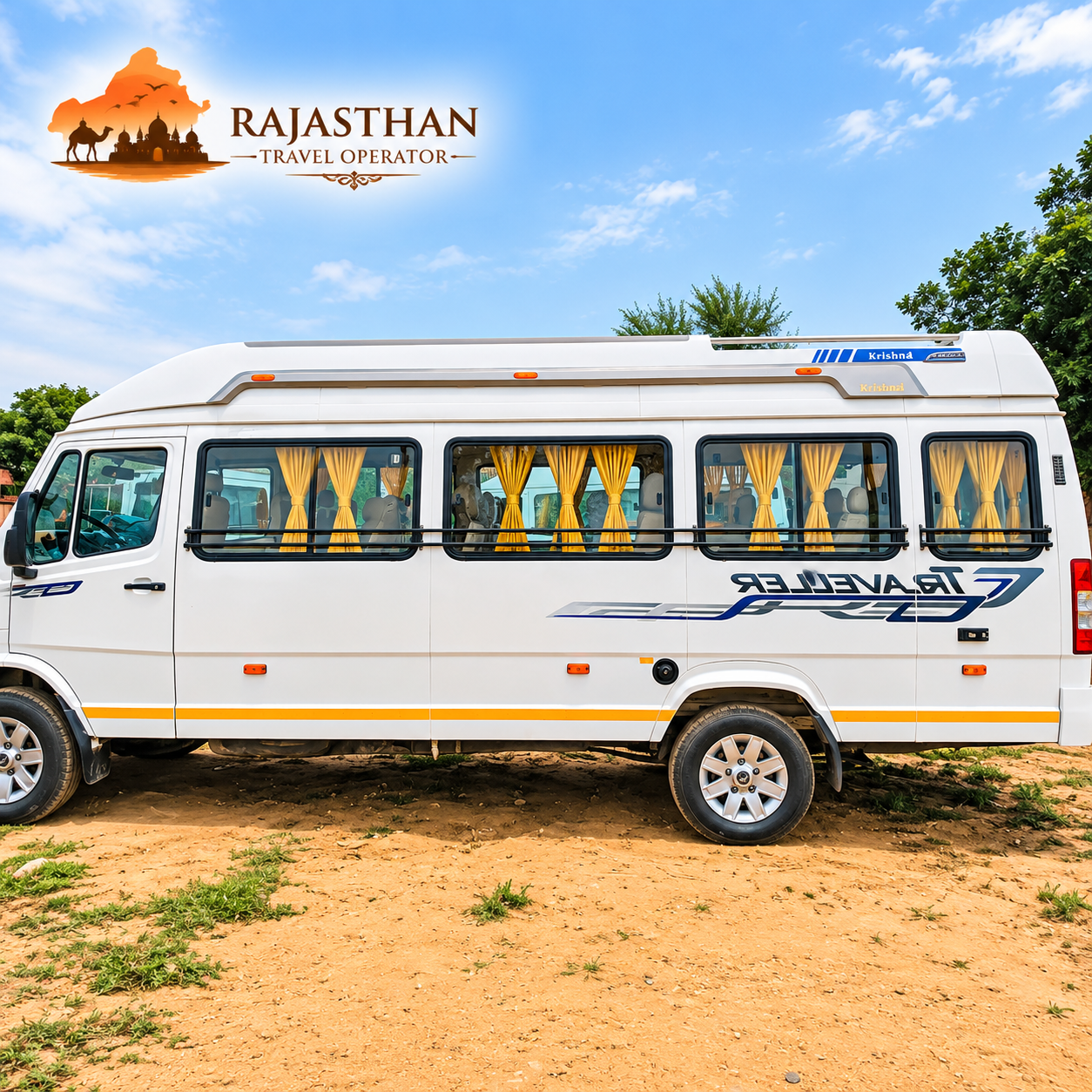
If your group has real multi-day luggage, this is also the point to confirm the roof carrier is being fitted, with your exact bag count stated so it can be sized and roped properly before pickup. For an Urbania booking like the 12 seater Urbania, confirm cabin luggage capacity instead, since that platform doesn’t offer a roof carrier at any seat count.
Step Five: Advance Payment and Booking Confirmation
Most Jaipur operators ask for a partial advance to lock in the booking, typically a percentage of the total quoted amount, with the balance paid to the driver on the day of pickup or at the end of the trip depending on the operator’s policy. Before paying anything, get the full booking confirmed in writing — vehicle model, trim, seat count, dates, itinerary, the all-inclusive price, and the cancellation terms, all in one message you can refer back to.
Ask specifically about cancellation and rescheduling policy at this stage, even if you don’t expect to need it. Knowing what’s refundable and by when protects you if travel dates shift, which happens more often than people expect, especially around family trips with multiple decision-makers.
Step Six: The Day of Pickup
A reliable operator confirms the driver’s details and estimated arrival time the evening before or the morning of pickup. When the vehicle arrives, do a quick visual check against what was promised — seat count, trim, roof carrier fitted if that was agreed, and general cleanliness and condition. It’s reasonable to raise a concern immediately if something doesn’t match what was confirmed; a good operator will address it before the trip starts rather than leaving it to sort out mid-journey.
For a multi-city circuit, confirm the day-by-day route with the driver at the start, including where overnight halts will happen, since this affects both the driver’s schedule and the night halt charges already agreed in your quote.
Step Seven: During the Trip
Toll payments, parking, and any state permits are usually handled by the driver as part of the agreed package, but it’s worth clarifying at the start of the trip whether these come out of a separate cash allowance or are already included in your total. For multi-day trips, the daily kilometre cap resets each day rather than accumulating, so a longer driving day followed by a shorter one doesn’t automatically average out — ask the driver or operator directly if you’re unsure how a specific day’s distance is being tracked against the cap.
If plans change mid-trip — an extra stop, a longer detour, an additional day — communicate this to the operator as early as possible rather than assuming it’s automatically covered by the original quote. Changes almost always affect the final bill, and flagging them early keeps the total transparent rather than becoming a surprise at settlement.
Step Eight: Settlement and Drop-off
At the end of the trip, the final settlement should match the all-inclusive figure agreed at booking, adjusted only for anything explicitly discussed during the trip — extra kilometres beyond the cap, an added day, or similar changes. This is where having gotten everything in writing at Step Three pays off directly: a clear original quote makes any final adjustment easy to verify rather than a point of dispute.
What Changes for Different Booking Types
Local, single-day bookings inside Jaipur skip most of the multi-day complexity — no night halt, no roof carrier planning for heavy luggage, and a simpler kilometre cap. The core process still applies: get an all-inclusive quote, confirm the vehicle, and settle at the end of the day.
Wedding and event bookings, often at larger seat counts like the 20 seater tempo traveller, typically involve more precise timing requirements — guest pickups from specific flights or trains, movement between venues on a tight schedule. Confirm timing commitments explicitly in writing, since these bookings have less flexibility for delay than a leisure circuit.
Multi-city outstation circuits are where every step above matters most, since driver allowance, night halt, tolls, and kilometre overage all genuinely apply and add up. These are also the bookings worth confirming furthest in advance, particularly around peak season dates.
Frequently Asked Questions
How far in advance should I start this process? Four to seven days ahead in normal season is usually enough to complete every step comfortably. Around wedding muhurats, Diwali, the Pushkar fair window, and long weekends, start seven to fourteen days out, since the well-maintained vehicles across every size get committed early.
What if the vehicle that arrives doesn’t match what was confirmed? Raise it immediately with the operator before the trip starts. A reliable operator will resolve it on the spot; a written confirmation from Step Five is exactly what makes this conversation straightforward rather than a dispute.
Is the advance payment refundable if plans change? This varies by operator, which is exactly why it’s worth asking and getting the cancellation terms in writing during Step Five, before you’ve paid anything.
Do I need to negotiate the price, or is the first quote usually final? The first quote is almost always a starting base figure missing several cost components — the real negotiation, if any, happens once you have the full all-inclusive number and can compare it against another operator’s complete quote for the same itinerary.
What’s the most common mistake people make in this process? Skipping Step Three — accepting a base quote as the final price instead of asking for every cost layer combined into one figure. It’s the single step most responsible for quotes that look cheap upfront and turn out to be similar or more expensive once everything’s added up.
Final Word
Renting a tempo traveller in Jaipur isn’t complicated once you know the actual sequence — figure out your real numbers, get a complete quote rather than a base one, confirm the specific vehicle in writing, and keep communication open if anything changes mid-trip. Full comparisons across every seat count and trim in the fleet, from the smallest to the luxury Urbania tier, are worth reviewing before you start reaching out, so you already know what to ask for from the very first message.
Follow the process in order, get everything in writing at each stage, and there’s very little left in this booking that can genuinely go wrong.